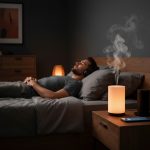
Man’s Guide to Shutting Off Your Brain
Essential Oils That Actually Work
When My Wife Handed Me a Purple Bottle
I’ll be honest with you I rolled my eyes.
After spending over two decades in the same job, working with my hands, solving problems, keeping things running, the last thing I thought I needed was… essential oils. My wife had been using them for a while, and one evening after a particularly brutal week, she walked into the garage where I was tinkering (because that’s where I decompress, right?) and handed me a small purple bottle.
“Just try it,” she said. “Put a few drops in the diffuser tonight.”
Lavender.
I thought it was going to smell like my grandmother’s linen closet or some fancy hotel lobby. But here’s the thing – I was wound so tight that week, I couldn’t think straight. Work problems were following me home. I’d sit down for dinner and still be running through tomorrow’s task list in my head. My wife could be talking to me, and I’d realize ten minutes later I hadn’t heard a single word.
So I tried it. Not because I believed in it, but because I was tired of being tired.
Twenty minutes later, something shifted. My shoulders dropped. That constant grinding tension in my jaw the one I didn’t even know was there until it wasn’t it just released. I wasn’t sleepy. I wasn’t suddenly zen or floating on a cloud. I was just… present. For the first time in weeks, I could actually sit still without my brain spinning.
That was ten years ago. If you’re reading this thinking essential oils are for spa days and scented candles, I get it. I was you. But stay with me here.
Let’s Address the Elephant in the Room: “Aren’t Essential Oils for Women?”
Look, I understand the hesitation. Walk into any store that sells essential oils and it’s all pastel colors, flowers, and words like “chakras” and “energy work.” I get why most guys walk right past that aisle.
But here’s what they don’t teach you in the marketing playbook: humans have been using plant medicine for thousands of years. Ancient Roman soldiers carried essential oils into battle. Frankincense was more valuable than gold. Cedarwood was used in temples and by warriors alike. This isn’t new age stuff it’s old-age stuff that we somehow forgot about.
Today, NFL players use essential oils for recovery. Special forces operators diffuse them for focus and stress management. High-level executives keep rollers in their desk drawers. They just don’t post about it on Instagram.
Here’s how I think about it. You maintain your truck, right? Change the oil, check the tires, keep it running smooth. You probably maintain your body too whether that’s the gym, eating right, or at least trying to get enough sleep.
Because that’s really what we’re talking about here. Not some mystical woo-woo experience. We’re talking about giving your body tools to downshift from fight-or-flight mode back to normal human mode. And contrary to popular belief, you can do this while still being a guy who works hard, solves problems, and doesn’t own a single piece of tie-dye clothing.
Why Men’s Relaxation Needs Are Different (And Why That Matters)
There’s something most articles about stress relief get wrong. They act like everyone unwinds the same way. But if you’ve ever tried following advice that tells you to “just relax” or “practice mindfulness” while your brain is still running at 90 miles per hour, you know that’s not how this works.
Men typically carry stress differently. Men are more likely to internalize stress and less likely to talk about it. We’re conditioned to be problem-solvers, providers, protectors. That mental load doesn’t just turn off when you clock out at 5 PM or walk in the door after work.
And here’s the kicker – there’s this gap that nobody talks about. That window between “wired from work” and “ready for bed” where you’re supposed to somehow be present with your family, enjoy your evening, maybe actually relax. But your brain is still churning through tomorrow’s problems, that conversation that went sideways, the fifteen things on your to-do list.
Sleep is one thing. We’ll crash eventually out of pure exhaustion. But that transition zone? That’s where guys struggle. That’s where we end up scrolling our phones for two hours, or just being physically present but mentally checked out.
When men search for essential oils online and yes, we do, millions of searches per month we’re not looking for “self-care spa experiences.” We’re typing things like:
- “How to stop thinking about work at home”
- “Natural anxiety relief that actually works”
- “Grounding essential oils for stress”
- “How to unwind after work
- Essential oils gave me a different tool. One that actually worked better and didn’t leave me foggy the next morning.
The Essential Oils That Actually Work (And Why)
Let me walk you through the oils that have made a real difference, not just for me, but based on what the research shows and what other men are actually searching for and using.
Lavender: The Multitool of Essential Oils
I know, I know. Lavender sounds about as masculine as a bubble bath, But hear me out.
Lavender is the most researched essential oil out there. We’re talking hundreds of peer-reviewed studies. A 2012 study found that lavender essential oil significantly decreased heart rate and blood pressure in participants who were exposed to stressful situations. Another study in 2018 showed it improved sleep quality in men specifically.
But here’s what most guys don’t know: men are actually searching for lavender more than you’d think. Why?
After-shave relief. Lavender is phenomenal for razor burn and skin irritation. Mix 2-3 drops with a carrier oil (like jojoba or sweet almond oil), and apply it after you shave. It’s anti-inflammatory and promotes healing. Purely functional, nothing fancy.
Sleep support. Put 4-5 drops in a diffuser about 30 minutes before bed. It’s not going to knock you out, but it signals to your nervous system that it’s time to downshift.
Blood flow and circulation. There’s growing interest in lavender for supporting healthy circulation during relaxation, which matters for everything from recovery to cardiovascular health.
The scent? It’s not perfumey if you get quality oil. It’s more herbal, almost like fresh herbs with a hint of sweetness. Totally tolerable, even if you’re skeptical.
My go-to use: Three drops on the back of my neck after a shower, mixed with a little lotion. Takes 30 seconds, makes a noticeable difference.
Vetiver: The “Turn Your Brain Off” Oil
If lavender is the gateway oil, vetiver is what you graduate to when you realize this actually works.
Vetiver comes from a grass root, and it smells like it – earthy, rich, almost smoky. Think whiskey barrel and wood shop, not flower shop. It’s deeply grounding, which is why it shows up constantly in searches for “calming oils for men” and “grounding essential oils.”
Vetiver essential oil has significant calming effects on brain wave activity. In practical terms, this is the oil for when your mind won’t shut up. When you’re lying in bed mentally replaying conversations or planning tomorrow’s meetings, vetiver is your friend.
Best uses:
- Evening diffuser blend: 3 drops vetiver + 2 drops cedarwood. Run it for 30 minutes while you’re winding down.
- Topical application: Mix with a carrier oil and apply to the bottoms of your feet before you sit down to decompress. I was skeptical about this one too, but the bottoms of your feet have large pores and absorb oils quickly.
I use vetiver on nights when I know I’m going to struggle to transition. After a high-stress day, after conflicts at work, or when I have a lot on my mind. It’s become part of my shutdown routine.
Copaiba: The Unsung Hero
Copaiba is the oil most guys have never heard of but should probably start using.
It comes from a Brazilian tree resin, and here’s why it matters: copaiba interacts with your endocannabinoid system – the same system that CBD affects. A study in Cannabis and Cannabinoid Research showed that beta-caryophyllene (the primary compound in copaiba) has significant anti-anxiety and anti-inflammatory properties.
The scent is mild, almost neutral with a slight woodsy note. This makes it perfect for:
- Beard oil base: Many commercial beard oils are loaded with synthetic fragrances. Make your own: carrier oil + 2 drops copaiba + 1 drop cedarwood.
- Night face routine: If you’re into skincare (and more men are than admit it), add a drop to your moisturizer.
- Diffuser blends: When you want the calming benefits without a strong scent.
I keep a roller bottle of copaiba mixed with carrier oil in my truck. When I’m having a stressful day, I roll it on my wrists during lunch break. Simple, discrete, effective.
The Masculine Grounding Trio: Black Spruce, Cedarwood, and Frankincense
There’s this concept in Japan called “forest bathing” – shinrin-yoku – where you literally go into the forest to reduce stress. Multiple studies have shown it lowers cortisol levels, reduces blood pressure, and improves mood.
These three oils together create that same effect without leaving your living room.
Black Spruce has a fresh, coniferous scent that’s energizing yet grounding. It’s like stepping into a pine forest after rain.
Cedarwood is warm, woody, and has been shown in research to have sedative effects. A 2003 study found that cedarwood oil increased the activity of parasympathetic nervous system activity that’s your “rest and digest” mode.
Frankincense has been used for thousands of years. Modern research shows it reduces anxiety and has anti-inflammatory properties. The scent is resinous, slightly spicy, deeply calming.
My “Shut It Down” blend:
- 3 drops black spruce
- 2 drops cedarwood
- 2 drops frankincense
- Run in a diffuser 30 minutes before you want to start unwinding
This is my go-to after long days, especially physical work days. There’s something about this combination that just brings everything back to baseline. I diffuse this at the end of the day.
Topical option: Mix the same ratio in a carrier oil (about 6-8 drops total per ounce of carrier oil). Apply to your chest and shoulders after a shower. The scent lingers subtly and the physical warmth of applying it is part of the relaxation ritual.
Roman Chamomile and Bergamot: The Nervous System Reset
These two might sound gentle, but they’re powerful for calming an overactive nervous system.
Roman Chamomile isn’t just for tea. Research in Phytomedicine showed that chamomile extract has significant anti-anxiety activity. The essential oil works even faster because you’re inhaling it directly into your limbic system the emotional center of your brain.
Bergamot is a citrus, but it’s unique because it’s calming rather than energizing. Inhaling bergamot essential oil significantly reduced cortisol levels and improved mood in participants.
Best for: High-pressure jobs where you’re making decisions all day, new dads trying to regulate your own emotions so you can show up for your family, shift workers who need to create an “evening” whenever you get home regardless of actual time.
How to use: Add 2 drops of each to your shower floor and let the steam disperse them. Or run 4 drops total (2 of each) in a diffuser while you’re having dinner or watching TV.
Geranium: The Unexpected Emotional Balance Oil
Okay, this one sounds floral because it is. But before you skip this section, listen u
The key with geranium is to never use it alone, always blend it. It balances the heavier, woodier oils and adds an emotional regulation component that some of the others don’t have.
My blend for rough weeks:
- 1 drop geranium
- 3 drops vetiver
- 2 drops sandalwood
Run this when stress isn’t just physical but emotional. When you’re dealing with difficult situations, conflict, uncertainty. I discovered this combination during a particularly challenging transition period when I was figuring out the next chapter after leaving my long-term job. It helped me stay steady when everything felt unstable.
How to Actually Use This Stuff (Practical Application)
Theory is great, but let’s talk about real-world application. Here’s how to actually integrate this into your life without it becoming another thing on your to-do list.
If You’re Brand New:
Start with ONE oil. I recommend either lavender or vetiver.
Get a basic ultrasonic diffuser. You don’t need anything fancy a $20-30 model from Amazon works fine. Look for one with a timer function so it automatically shuts off.
Commit to 15 minutes. That’s it. Diffuse while you’re doing something you’d do anyway, eating dinner, watching a show, sitting on the couch. You’re not adding a task; you’re adding a tool to an existing routine.
Week 1 protocol:
- Fill diffuser with water to the line
- Add 4-5 drops of your chosen oil
- Turn it on 30 minutes before you want to feel the effect
- Notice what you notice (or don’t)
Give it a full week before deciding if it works. You might need a few sessions to recognize the pattern.
If You’re Already Using Oils:
Time to level up with blends. Single oils are great, but combinations work synergistically meaning the combined effect is greater than each oil individually.
Rotate your oils. Your nose can adapt to scents over time (it’s called olfactory fatigue). I rotate through 3-4 different blends throughout the week to keep the effects strong.
Track what works. I keep a simple note in my phone: which blend I used, how I felt before, how I felt after. After a month, patterns emerge. You’ll find your go-to oils for specific situations.
Experiment with application methods:
- Diffuser for ambient effect
- Topical for targeted, faster absorption
- Shower steam for a quick reset
By Lifestyle – What Actually Works
Post-Gym Recovery:
Lavender + Copaiba mixed in carrier oil, applied to sore muscles. The lavender helps with inflammation, copaiba supports the endocannabinoid system for pain management. I use this on my shoulders and lower back after heavy lifting days.
High-Stress Job / Decision Fatigue:
Vetiver + Frankincense in a diffuser before you end your workday (or if working from home, as your transition ritual). This combination helps shut off the problem-solving brain and shift into presence mode.
New Dads / Young Kids:
Roman Chamomile + Bergamot. When you’re running on 4 hours of sleep and need to not snap at everyone, this blend helps regulate your own emotional state so you can show up as the dad (or partner) you want to be. Diffuse it in your bedroom or bathroom while you’re getting ready for the day.
Shift Workers / Non-Traditional Schedules:
Black Spruce + Cedarwood. Your rhythm is already confused, so create an “evening” whenever you need one. Diffuse this blend + dim the lights + reduce screen time 30 minutes before your intended sleep time, regardless of whether it’s 2 PM or 2 AM.
Entrepreneurs / High-Burnout Risk:
Sandalwood + Vetiver. When work is always with you because you own the business, you need a hard stop signal. I diffuse this combination as my “office is closed” ritual – even if my office is just a corner of the living room. It’s a psychological boundary as much as a physiological one.
Diffuser Settings That Actually Matter
Don’t overthink this, but do get it right:
Room size: Standard 12×12 room needs 4-6 drops total. Bigger room, add 1-2 more drops. Smaller room (like a bathroom), use 3-4 drops.
Run time: 30 minutes on, 30 minutes off. Continuous diffusion leads to olfactory fatigue – you stop smelling it and it stops working as well.
Timing: Start diffusing 30 minutes BEFORE you want to feel the effect. Essential oils work through inhalation and affecting your limbic system, but they’re not instant. Give them time to work.
Water temperature: Use room temperature or cool water. Hot water can degrade some of the beneficial compounds.
What Relaxation Actually Looks Like (Managing Expectations)
This is important because if you’re expecting some instant zen moment where angels sing and all your problems disappear, you’re going to be disappointed.
Essential oils aren’t sedatives. They’re not going to knock you out or flip a switch from stressed to blissed out in 30 seconds.
What they do is create a gradual downshift. Think of it like dimming a light rather than flipping it off. Over 15-20 minutes, you start noticing:
- Your shoulders aren’t up around your ears anymore
- Your jaw unclenches (seriously, touch your jaw right now – are you clenching? Most of us are)
- You can actually focus on one thing instead of mental channel-surfing
- When your wife or kids are talking to you, you’re actually listening instead of planning tomorrow
- You can watch a show without checking your phone every 90 seconds
- That background anxiety hum gets quieter
For me, I know it’s working when I realize I’ve been sitting still for 15 minutes without feeling like I need to be doing something. That’s huge for someone whose default mode is “productive.”
It’s subtle at first. After a week or two of consistent use, the effects become more obvious. After a month, you realize you’ve fundamentally changed how you transition from work mode to life mode.
A Note on Quality (Because It Actually Matters)
Not all essential oils are created equal. I learned this the hard way when I bought cheap oils from a big-box store and wondered why they didn’t work like the ones my wife had been using.
Here’s what you need to know:
Look for “therapeutic grade” or “100% pure essential oil” on the label. If it doesn’t say this, it’s likely diluted or synthetic.
Price check: Real essential oils aren’t super cheap. If you’re seeing lavender for $5 a bottle, it’s probably not the real thing. Expect to pay $12-25 for a good quality 15ml bottle of common oils. Rarer oils like sandalwood or frankincense will be more.
Source matters: Companies that provide GC/MS testing (Gas Chromatography/Mass Spectrometry) are showing you the chemical composition of the oil. That’s transparency you want.
I’m not going to tell you exactly which brand to buy, there are several good ones out there. But do your homework. The cheap stuff won’t work and will make you think this whole thing is nonsense.
Quick Safety Disclaimer (The Boring But Important Stuff)
Look, I’m not a doctor, and this isn’t medical advice. This is me sharing what’s worked in my own life and what the research says. But you need to know a few things:
Always dilute before topical use. Essential oils are concentrated. A good rule is 2-3 drops of essential oil per teaspoon of carrier oil. Carrier oils are things like jojoba, sweet almond, or fractionated coconut oil.
Patch test new oils. Put a small amount on your inner forearm and wait 24 hours. If you’re going to react, you’ll know.
If you’re on medications, check with your doctor. Some essential oils can interact with certain medications, especially blood thinners or blood pressure meds.
Pregnant? Nursing? Definitely check with a healthcare provider first.
Keep them away from your kids and pets. What’s safe for you isn’t necessarily safe for them. Store oils out of reach and research which ones are safe around animals if you have pets.
Quality matters for safety too. Cheap synthetic oils can contain harmful additives. Stick with reputable companies.
The Challenge (And Why It’s Worth It)
Here’s what I want you to do this week:
Pick ONE oil. Just one.
Pick ONE way to use it. Diffuser, topical, whatever sounds most doable.
Commit to 7 days. Same time each day if possible.
That’s it.
You don’t have to buy ten different oils and create elaborate blending rituals. You don’t have to completely overhaul your evening routine. You don’t have to become an essential oil expert.
Just try one thing, consistently, for one week.
Why? Because you don’t have to stay wired all evening. You don’t have to carry work stress into your home and let it steal your evening, your presence, your ability to actually enjoy your life outside of work.
There’s a better way to transition from work mode to life mode. A way that doesn’t involve scrolling your phone for two hours or just checking out mentally while you’re physically present.
I’m still the same guy who was skeptical ten years ago. I still work hard, solve problems, and maintain the same values I always have. But now I’m also the guy who can actually be present when I get home. Who can sit through dinner without mentally running through tomorrow’s task list. Who sleeps better and wakes up clearer.
That’s worth 15 minutes and a diffuser.
Ten years ago, my wife handed me a purple bottle in the garage. I rolled my eyes but tried it anyway. Best eye-roll of my life.
Your turn.
Ready to try essential oils?
Here is a link to brand I use.
Disclaimer: This content is for educational and informational purposes only. It is not intended as medical advice or as a substitute for professional healthcare. Essential oils are not FDA-approved to diagnose, treat, cure, or prevent any disease. Always consult with a qualified healthcare provider before using essential oils, especially if you are pregnant, nursing, taking medications, or have a medical condition. Always dilute essential oils properly before topical use and perform a patch test. Keep essential oils out of reach of children and pets. Individual results may vary.